

KOTA KINABALU: The proposal to increase the number of State Assembly (DUN) and Parliamentary seats in Sabah is seen as a rational step that could help address uneven development issues in the state, said political analysts.
Arvin Tajari from Universiti Teknologi Mara (UiTM) said increasing the number of state constituencies to 94 and parliamentary seats to 36 should be considered, given Sabah’s vast land area, its population exceeding three million, and the relatively limited number of elected representatives.
He said the imbalance in constituency size and population between urban and rural areas has widened development disparity and affected the ability of elected representatives to effectively raise and address the needs of their constituents.
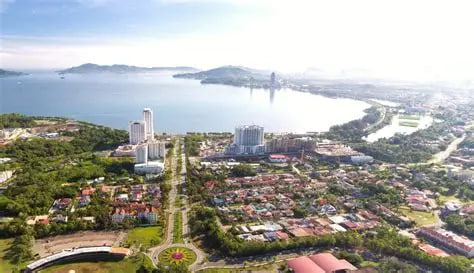
He cited extreme differences between small urban constituencies such as Api-Api (4 sq km), Kukusan (8 sq km) and Tanjung Batu (11 sq km), compared to interior constituencies exceeding 10,000 sq km such as Kuamut, Nabawan and Sukau.
“This situation often causes the voices of rural residents to be sidelined due to the logistical and administrative constraints faced by their assemblymen compared to those in small, compact urban constituencies.
“Kuamut, which covers more than 10,000 sq km, can realistically be divided into three constituencies so that people’s voices can be channelled more effectively and development can be distributed more equitably. This can address uneven development,” he told FMT.
He was responding to Balung Assemblyman Syed Ahmad Syed Abas’ suggestion that Sabah should increase its State Assembly and Parliamentary seats, similar to Sarawak which approved such a move last July.
The Gabungan Rakyat Sabah (GRS) representative proposed raising state constituencies to 94 from the current 73 and increasing Parliamentary seats from 25 to 36.
Records show Sabah’s state seats were increased to 73 starting from the 2020 state election, compared to 60 previously, with newly added constituencies including Lamag, Pintasan and Tulid, while Parliamentary seats remain at 25.

Meanwhile, Borneo Geo-Politics & Electoral Studies (GeoPES) researcher Syahruddin Awang Ahmad believes that any increase in seats must be accompanied by serious institutional reforms.
He said Sabah’s main issues are not merely the lack of elected representatives, but weaknesses in policy implementation, resource management leakages, hardcore poverty and failure in basic infrastructure development.
“These need to be addressed to ensure the increase in seats is truly effective,” said the Universiti Malaysia Sabah (UMS) academic.
Syahruddin also expects that expanding seats and redelineation exercises will drastically reshape Sabah’s political dynamics, likely strengthening GRS, especially in rural areas expected to be divided.
“This move could weaken the influence of national parties as smaller constituencies often strengthen regionalism and local sentiment.
“Competition between GRS, Warisan and other opposition parties will also become more complex because redelineation exercises generally favour incumbents with access to government resources,” he said.
–Ends

 and Parliamentary seats in Sabah is seen)